
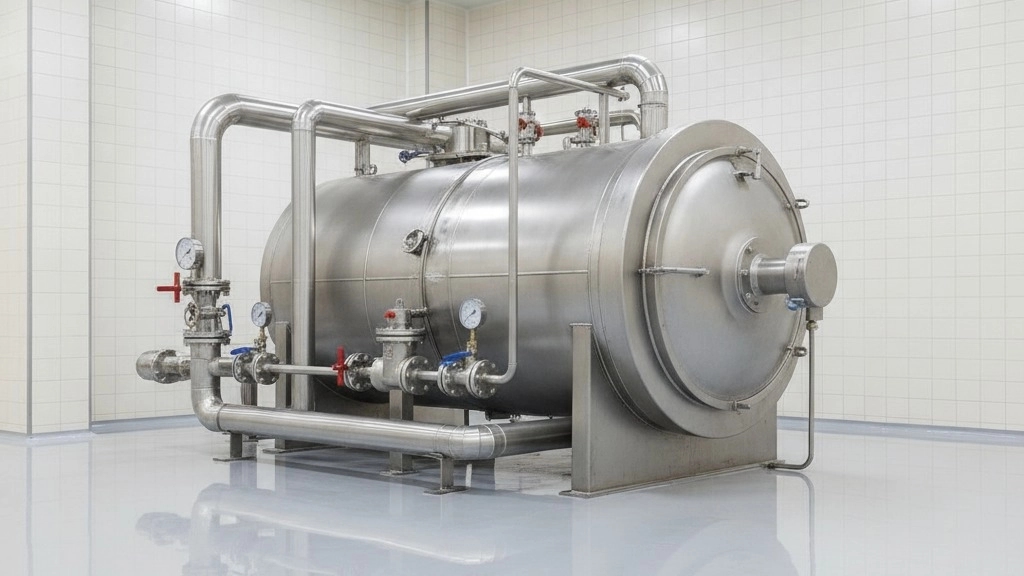
Meat industry and modern slaughterhouses today play a vital role in providing the food chain and maintaining public health. However, the slaughtering process of livestock and poultry is naturally associated with the production of large volumes of non-edible waste such as blood, feathers, bones, viscera and fat. Releasing these wastes in nature, in addition to causing unpleasant odors and the accumulation of insects, brings severe environmental and health risks. In the meantime, as one of the most advanced and efficient industrial equipment, the waste cooking pot has created a fundamental change in the management of slaughterhouse waste. In this article, we will comprehensively examine the performance, benefits and importance of using waste cooking boilers in modern slaughterhouses and the outstanding role of Sablan Bohar Poya manufacturing equipment in this industry.
What is a waste cooking pot and how does it work?
Waste cooking pot, which is also called rendering vessel in industrial terms, is a closed and pressurized system that cooks, sterilizes and recycles meat and bone waste using indirect heat of steam.
The working mechanism of this device is that first, the waste collected from the slaughter lines is directed into the tank of the waste cooking pot. Then, by injecting steam with high pressure and temperature into the outer wall (jacket) of the boiler, the heat is uniformly transferred to the internal materials. The rotating shaft and the internal blades of the device constantly stir the waste so that the process of cooking and disintegration of the tissues is done completely and uniformly. This thermal process evaporates excess moisture, separates fats and completely destroys all microorganisms and pathogens.
The key role of the waste cooking pot in the hygiene of slaughterhouses
Traditional slaughterhouses have always faced the challenge of sanitary waste disposal due to the lack of modern recycling equipment. The accumulation of wet animal waste is the basis for the rapid growth of dangerous bacteria such as salmonella and Escherichia coli.
Using waste cooking pot in modern slaughterhouses completely eliminates this health threat. The high temperature of the cooking process (usually between 120 and 140 °C) under high atmospheric pressure ensures the sterilization process. The output of this machine is a product completely free of any pathogenic agents, which guarantees the health of the factory environment and the local communities around the slaughterhouse. Sablan Bohar Poya Company, considering the highest health standards, has designed and built these boilers with a resistant body and advanced insulation systems to prevent the spread of any secondary pollution.
Waste recycling and production of valuable by-products
One of the most attractive economic aspects of using a waste cooking pot in modern slaughterhouses is the conversion of worthless waste into valuable commercial products. The rendering process transforms waste into two major products:
- Meat and bone powder: This product is rich in protein, calcium and phosphorus and is used as a valuable food supplement in livestock, poultry and aquatic diets.
- Industrial oil and fat: Fats extracted in the waste cooking process, after purification in industries such as soap making, production of industrial lubricants and even biofuels (biodiesel) are widely used. have.
Slaughterhouses that are equipped with modern systems made by Sablan Bohar Poya Company can produce these by-products with high efficiency and significantly reduce their current costs and achieve secondary profitability.
Technical features of the standard waste cooking pot
Designing an efficient waste incinerator requires precise engineering knowledge and the use of high quality materials. Since these devices are subjected to intense steam pressure and continuous wear of bone and hard materials, the following features are of vital importance in their construction:
- Body and shaft material: The inner tank and moving shaft are usually made of thick and wear-resistant steel sheets or stainless steel to resist the corrosion of fatty acids and bone wear.
- Powerful drive system: The electric motor and gearbox of the machine must be able to rotate the heavy shaft through a pile of dense waste.
- Condenser system and Deodorization: One of the problems of the rendering process is the emission of odorous gases. Modern boilers are equipped with a condenser system to liquefy exhaust vapors and advanced deodorization systems to purify exhaust air.
Sablan Pooya Steam Company, using the latest technology and using standard materials, produces and markets waste cooking boilers with the highest thermal efficiency and the lowest energy consumption.
Environmental benefits of using a waste cooking pot
Protecting the environment is one of the main pillars of sustainable development in the food industry. Traditional methods of waste disposal, such as burying in the ground or improper burning, cause severe pollution of underground water and release of harmful greenhouse gases.
In contrast, the use of a waste incinerator creates a circular and environmentally friendly system (circular economy). In this method, no waste material is delivered to the environment; Rather, all parts of animal waste are recycled and returned to the cycle of consumption. Reducing the volume of burial waste and preventing meat waste leachate from penetrating the soil is one of the biggest environmental achievements of installing this equipment in industrial slaughterhouses.
Optimization of energy consumption in the rendering process
Decreasing energy costs is one of the main concerns of slaughterhouse managers. The waste cooking process requires a lot of thermal energy. Therefore, the optimal design of the waste cooking boiler plays an important role in reducing the fuel consumption of burners and steam.
Intelligent design of the thickness of the walls, basic insulation of the body with high-density stone wool, and optimization of the angles of the shaft blades for better heat transfer, are among the measures that have been implemented in the production equipment of Sablan Bohar Poya Company. These features increase the speed of heat transfer, reduce cooking time, and as a result significantly reduce energy consumption in the long run.
The role of Sablan Bohar Poya Company in localization of slaughterhouse equipment
The country's industry needs the expertise of domestic engineers to get rid of dependence on heavy equipment imports. As one of the pioneers in the design and construction of pressure tanks, steam boilers and waste cooking boilers in Iran, Sablan Bohar Pooya Company has been able to fully meet the needs of modern slaughterhouses in the country.
The production equipment of this company is designed according to the international standards of pressure vessels and all the manufacturing steps are carried out under the strict supervision of quality control inspectors. Taking advantage of reliable after-sales services, providing spare parts in the fastest possible time, and the possibility of customizing the dimensions and capacity of the devices based on the special needs of each slaughterhouse, are among the competitive advantages that Poya Steam Company offers to its customers.
Important points in the maintenance and operation of waste cooking pot
The lifespan and efficiency of the waste cooking pot largely depends on how to properly maintain and use it. Machine operators should regularly check mechanical and hydraulic systems. Some key maintenance practices include:
- Continuous greasing and lubrication: Bearings and gearboxes of the main shaft must be continuously lubricated due to heavy load bearing.
- Periodical washing of the tank: After emptying each cooking part, it is necessary to wash the inside of the pot to prevent materials from sticking and burning in the next parts.
- Checking the safety valves: to The reason for the operation of the device under high pressure is the periodic testing of safety valves and pressure gauges to maintain the safety of personnel.
The technical support team of Sablan Bohar Poya Company provides the necessary training to the slaughterhouse operators during the installation of the equipment and formulates preventive maintenance programs to increase the useful life of the devices.
Conclusion and future perspective
Modern slaughterhouses cannot continue their sustainable and profitable activity without efficient waste management systems. Waste cooking pot is not only a sanitary tool for the disposal of dangerous animal waste, but also a strategic device for creating added value and producing secondary products such as meat powder and industrial fat.
Investing in the purchase of high-quality and standard devices will guarantee the continuation of production and reduce repair costs. With years of brilliant experience in the design and manufacture of industrial machinery, Sablan Bohar Pooya Company is ready to accompany and support modern slaughterhouses in the country by providing expert advice and producing the most advanced rendering equipment.